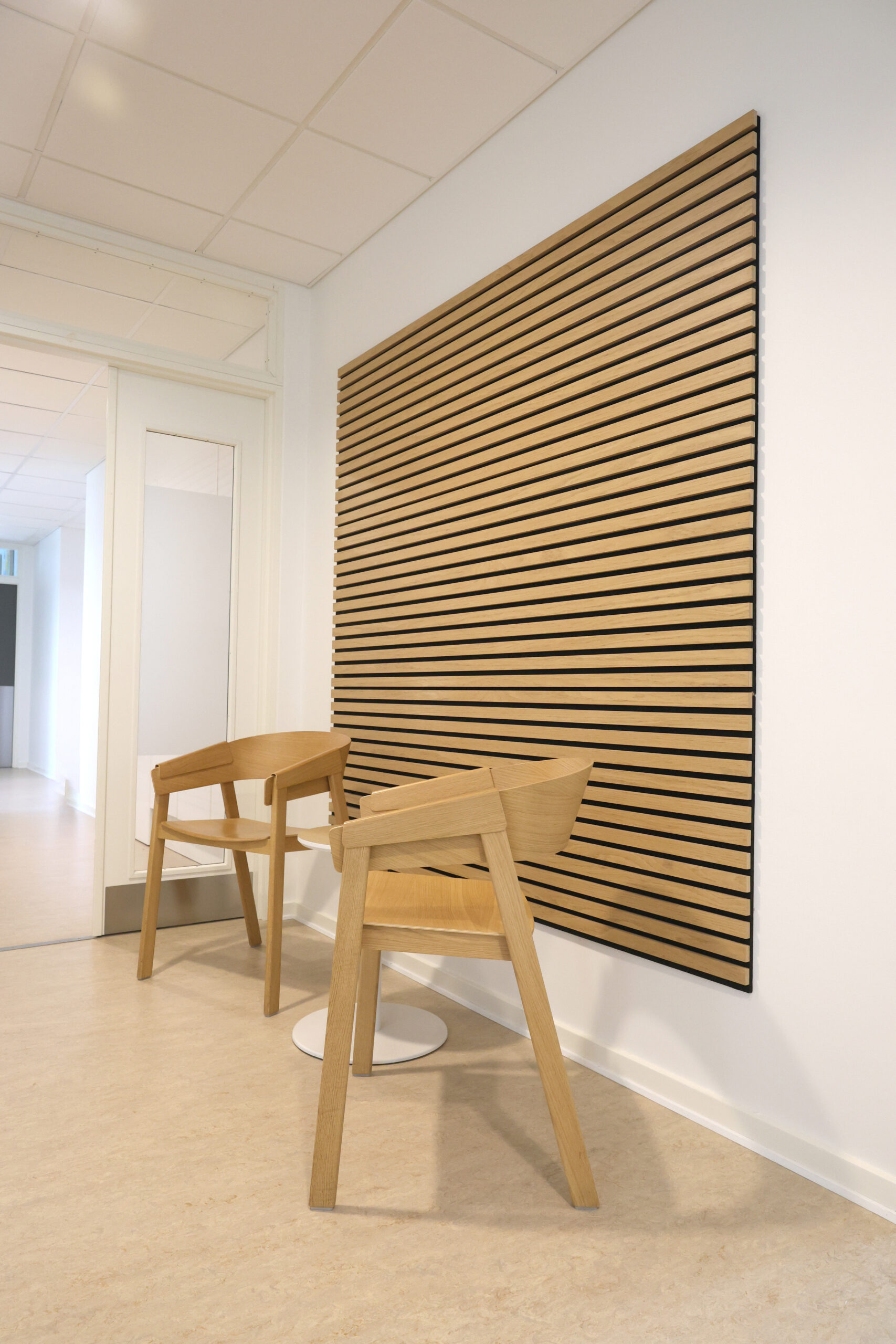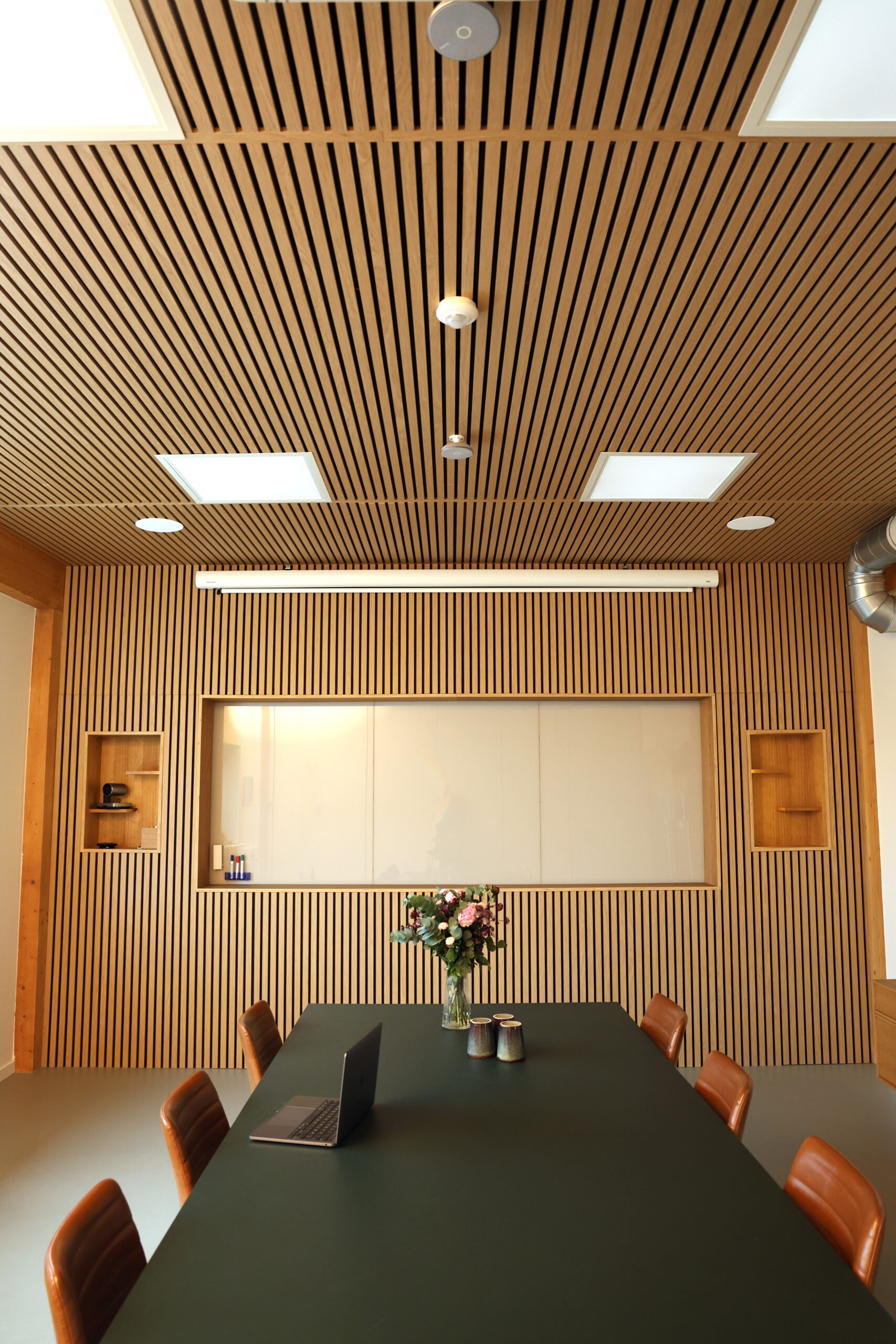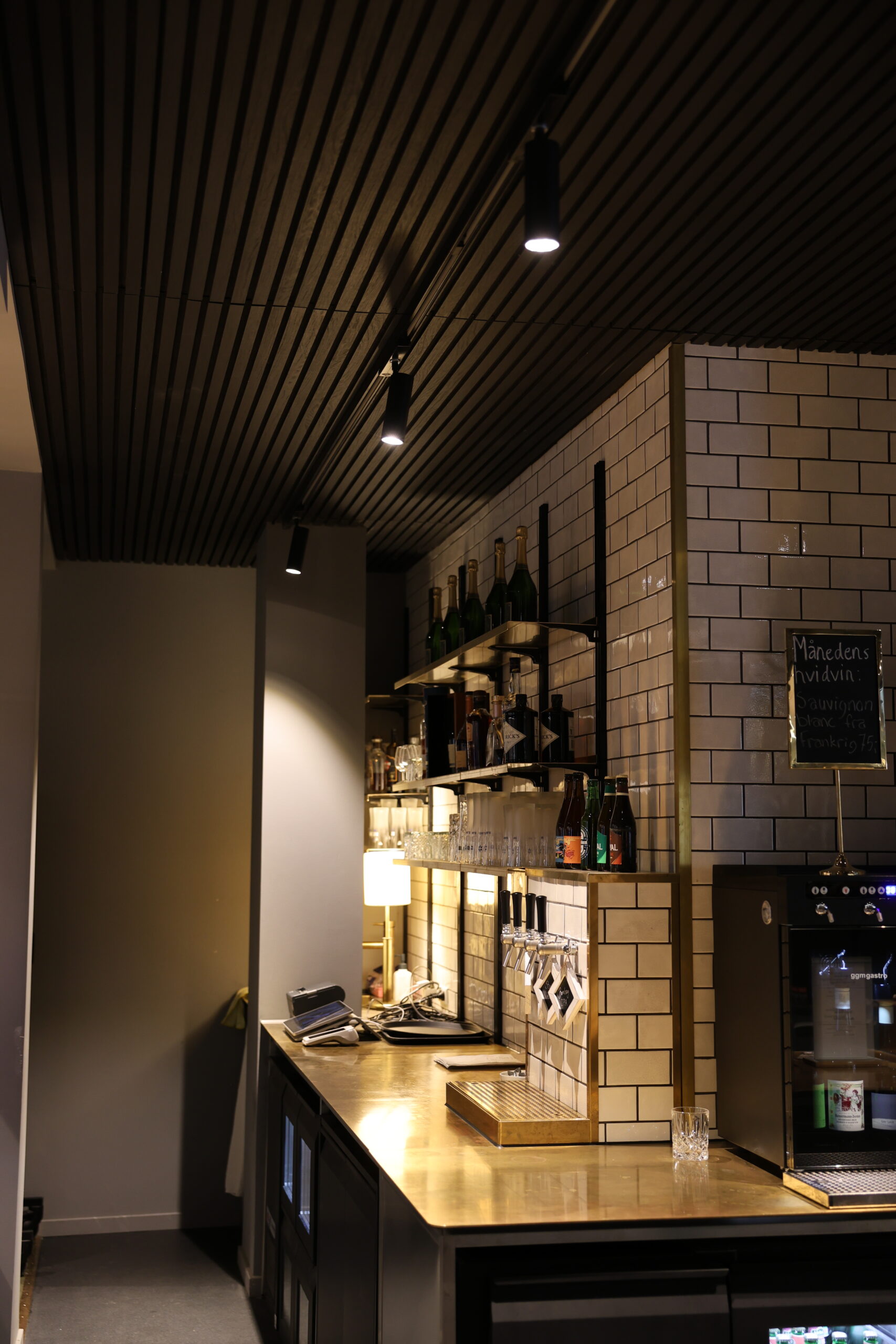
Developed for projects with stringent requirements
In modern construction, there are increasing demands regarding fire safety, acoustics and aesthetics – and, not least, the documentation supporting the choice of materials. This places higher demands on solutions that do not merely function in isolation, but can be integrated naturally into the overall design.
The fire-retardant acoustic panels have been developed with precisely this in mind. They combine documented fire safety with effective sound absorption and a design that can be integrated into various types of architecture. The result is a solution that can be used in both public and private buildings where requirements are high and where materials must meet both technical and visual expectations.
Project enquiry
We understand the importance of delivering professional solutions that precisely meet your requirements and expectations. That is why we offer no-obligation meetings to ensure we fully understand your specific requirements and expectations. Our team is dedicated to providing expert advice and ensuring that your projects are carried out efficiently and to the highest standard.
Certification establishes a common framework for sustainable construction
Certification of sustainable buildings provides reassurance; as the focus on sustainability has grown, so too has the need for certification, as this establishes a common framework for sustainability. The certification relevant to a particular building project may vary, and there are a number of certification schemes within the Danish construction industry. These certifications are not something we, as a manufacturer, hold or can obtain, as it is the building itself that is certified!
BREEAM, which was launched in 1990, is a UK sustainability certification scheme for buildings. BREEAM stands for Building Research Establishment Environmental Assessment Method and is used as a certification scheme in 89 countries.
BREEAM certification focuses primarily on the environment and indoor climate, whereas DGNB certification assesses a building based on multiple parameters and evaluates its environmental, social and economic sustainability on an equal footing. In Northern Europe, it is primarily the DGNB and BREEAM models that are used as standards.
LEED (Leadership in ENERGY and Environmental Design) is an American sustainability certification scheme established in 1998. LEED is used as a certification scheme in 135 countries. Like BREEAM, LEED certification focuses primarily on the environment and indoor climate. It is the client wishing to build a sustainable building who decides whether it should be a bronze, gold or platinum building based on the standard underpinning LEED. It is then the architect’s responsibility to design and plan the project so that the building achieves the necessary number of points to be certified as a bronze, gold or platinum building respectively.
As a manufacturer, FOG & VENØ cannot become LEED-certified. The company has decided to carry out an LCA on our products. It is this LCA that architects use as documentation in their LEED calculations, which awards the building the points contributed by the products.
DGNB is a sustainability certification scheme for buildings. The scheme gives equal weight to environmental, economic and social factors. DGNB was introduced in Germany in 2008 and has been adapted to the forthcoming European standards for sustainable construction, which came into force in 2013. DGNB gives equal weight to environmental, economic and social factors. Forty-nine criteria are assessed, and the points are totalled to produce a rating ranging from bronze to platinum.
Can FOG & VENØ become DGNB-certified? - As a manufacturer, it is not possible to become DGNB-certified. Fog & Venø has chosen to carry out an LCA (Life Cycle Assessment) of our products, and it is this LCA that architects use as documentation in their DGNB calculations, whereby the construction project receives the points contributed by the products
Data sheet
For projects where documentation is essential, the data sheet provides a comprehensive and clear overview of the panels’ technical properties, fire rating, construction and applications.
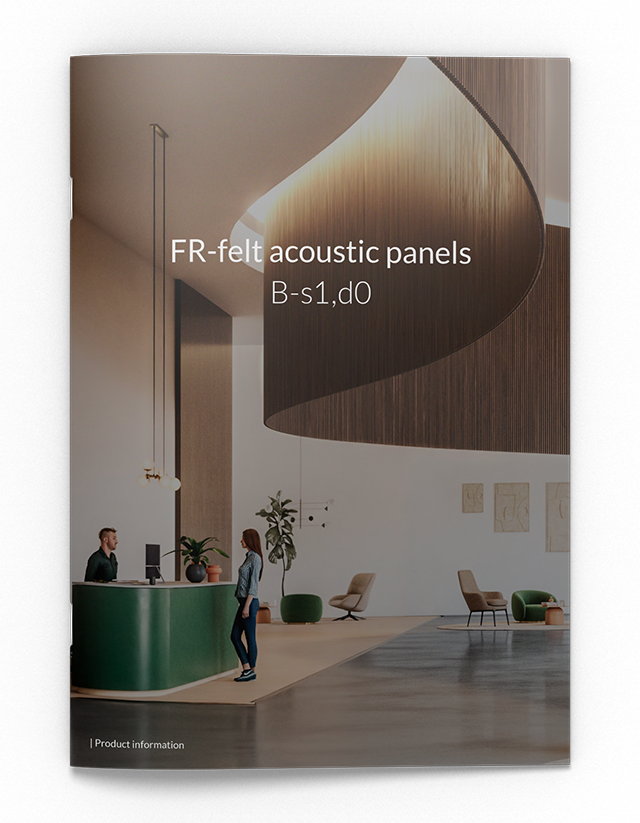
FR panels: fire safety, acoustics and design – all in one solution
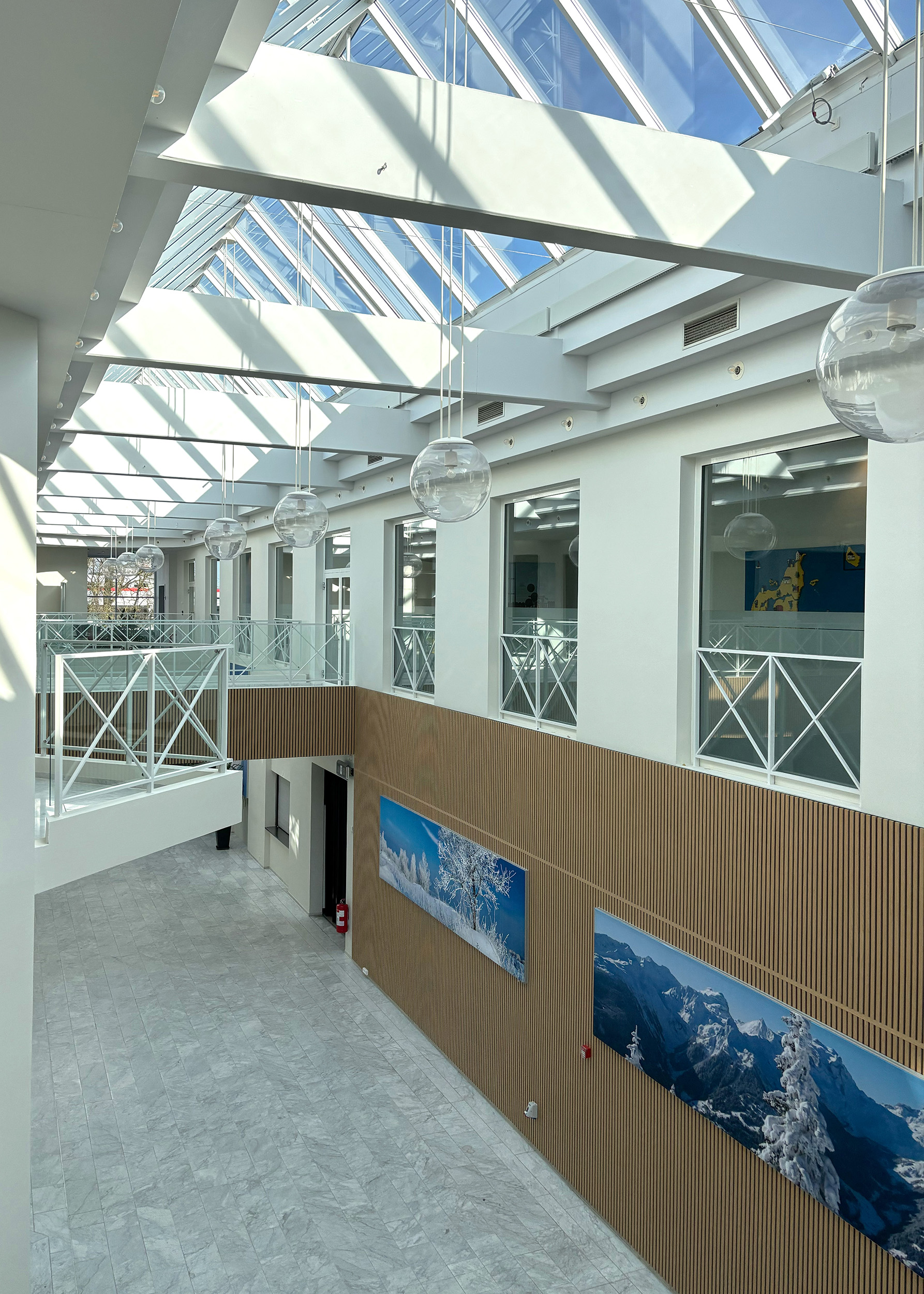
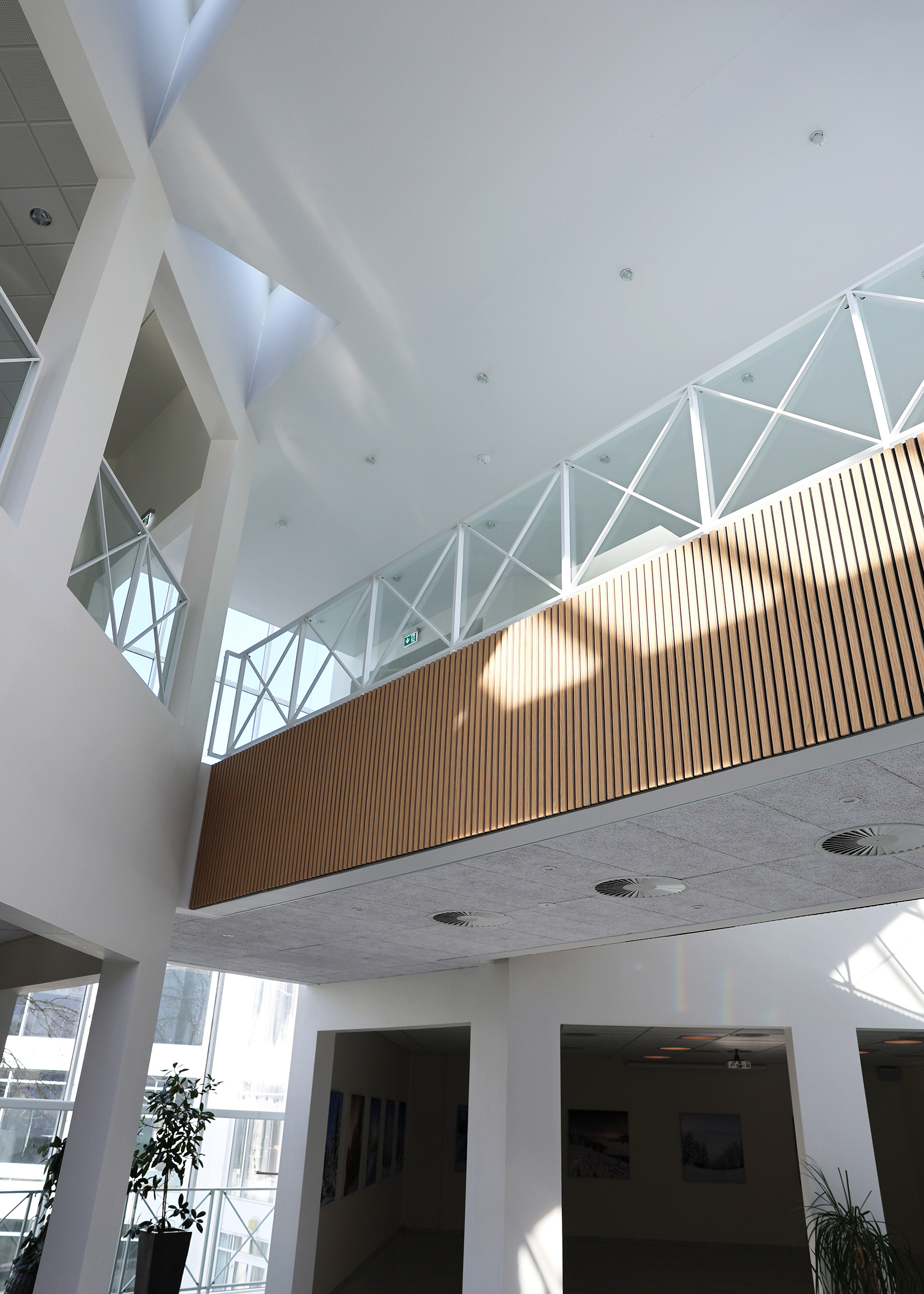
The demands placed on modern construction are becoming ever more stringent. Fire safety, acoustics and aesthetics are no longer separate priorities – they must work in harmony. FR panels have been developed precisely for this purpose: a proven solution that combines function and design without compromise.
- Certified fire safety (B-s1,d0)
Tested to EU standard EN 13823 and approved for both ceiling and wall installation – suitable for projects with stringent fire safety requirements. - Effective sound absorption
The combination of wooden slats and acoustic felt reduces reverberation and creates a pleasant and balanced acoustic environment. - Scandinavian design
Neutral, timeless colours and clean lines that fit naturally into both modern and classic architecture. - Responsible production
Manufactured in Denmark using FSC®-certified wood and acoustic felt made from recycled plastic. - Documented quality
Supports certification schemes such as DGNB, LEED and BREEAM in the overall construction project.
LCA – Life Cycle Assessment
An LCA (Life Cycle Assessment) provides a comprehensive overview of a product’s environmental impact throughout its entire life cycle – from raw material extraction and production to use and final disposal. The method is used to document and quantify factors such as energy consumption, CO₂ emissions and resource consumption.
Working with LCA creates a solid basis for making more responsible choices in both design and material selection. It makes it possible to identify where optimisation can be achieved and how the overall environmental impact can be reduced.
EPD – Environmental Product Declaration
An EPD (Environmental Product Declaration) is a verified environmental product declaration that documents a product’s environmental impact based on a life cycle assessment (LCA). It provides a transparent and standardised overview of, among other things, carbon footprint, energy consumption and resource use.
EPDs are used as an important basis for decision-making in construction projects where there are requirements for documentation and sustainability. They make it possible to compare products on a consistent basis and contribute to more transparent and responsible material choices.