
Not our word alone
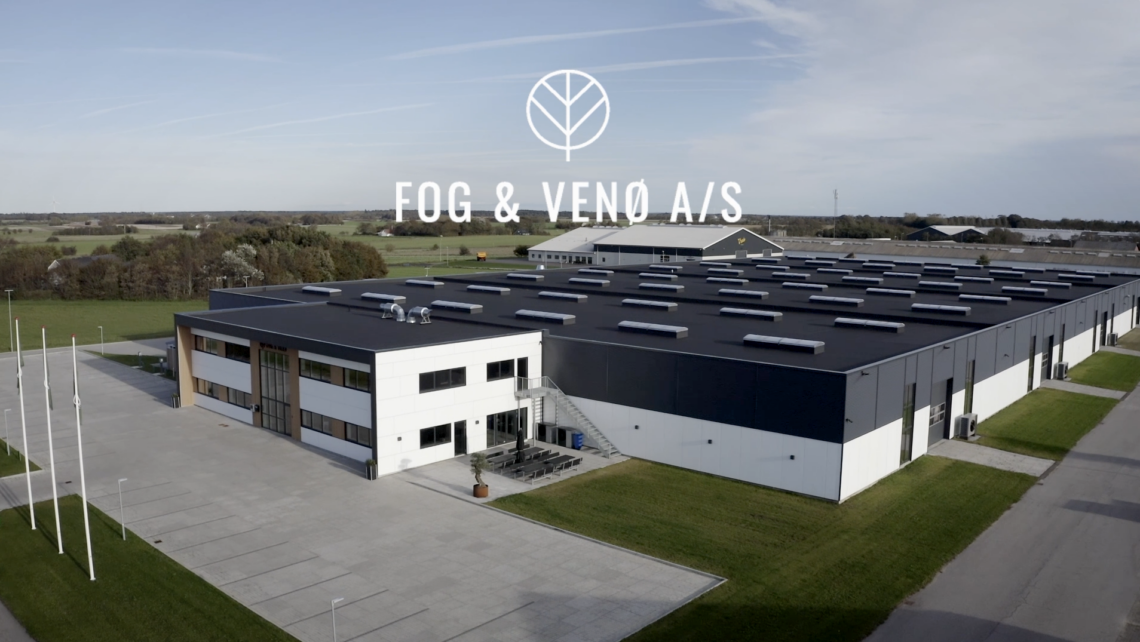
We're based in the middle of the Jutland heath — close to nature, to farmland, with fields and meadows just outside our production. Perhaps that's why it has always felt natural to care for the craft we come from.
We don't hide that we run a business. But we try to be honest and transparent about it. And we know it's easy to overlook your own blind spots — which is why independent partners matter so much to us. They're the ones who document and guide us, so it isn't only us assessing ourselves.
Certifications
We don't ask you to take our word for it. Our panels are assessed and certified by independent third parties — here is the documentation.
FSC™
FSC™ certification documents that the wood can be traced back to FSC™-certified and controlled sources throughout the supply chain.
The Nordic Swan Ecolabel
The official ecolabel of the Nordic countries — an independent Type I certification (ISO 14024) that assesses the product across its entire life cycle.
PEFC
An independent forest certification documenting the traceability of wood from PEFC-certified forests.
Documentation for the construction industry
In modern construction, documentation is essential. That's why we prepare Life Cycle Assessments (LCA reports), giving a clear picture of how our products impact the environment throughout their entire lifespan.
With LCA reports, we support builders and contractors in achieving certifications such as DGNB, LEED and BREEAM. Our approach is precise, transparent documentation that enables our customers to meet the demands of the construction industry.
Our ESG report
Responsibility is also about people and operations. In our ESG report, we document our work on employee well-being and development and on transparent business practices — how we turn ambitions into concrete action.
LCA
LCA stands for ‘Life Cycle Assessment’, and it is a method for evaluating the environmental impacts of a product throughout its entire life cycle, i.e. from raw material extraction, production and distribution to use, recycling and disposal. The purpose of an LCA is to quantify and assess environmental aspects such as energy consumption, greenhouse gas emissions, water consumption and other resource use, in order to determine how to minimise negative impacts and improve sustainability. LCA is often used to make informed decisions regarding environmental impact, product development and process optimisation.
Wood Panels

Linoleum Panels
FAQ
Certification of sustainable buildings provides developers, consultants and contractors with a common, documented basis on which to assess sustainability. The greater the focus on sustainability, the greater the need for this kind of common framework. The certification relevant to a particular building project may vary, and there are a number of certification schemes within the Danish construction industry. As a manufacturer, we do not hold – nor can we obtain – these certifications, as it is the building itself that is certified!
BREEAM, launched in 1990, is a British sustainability certification for buildings. BREEAM stands for Building Research Establishment Environmental Assessment Method and is used as a certification scheme in 89 countries.
The BREEAM certification primarily focuses on environmental and indoor climate aspects, whereas the DGNB certification evaluates based on a wider range of parameters of the building, assessing the environmental, social, and economic sustainability of the construction on equal terms. In Northern Europe, it is primarily the DGNB and BREEAM models that are used as standards.
LEED (Leadership in Energy and Environmental Design) is an American sustainability certification established in 1998. LEED is used as a certification scheme in 135 countries. Like BREEAM, LEED certification primarily focuses on the environment and indoor climate. It is up to the developer who wants to construct a sustainable building to decide whether it should be a bronze, gold, or platinum building according to the standards set under LEED. It is then the architect's responsibility to design and plan the project so that the construction achieves the necessary points to be certified as bronze, gold, or platinum.
As a manufacturer, FOG & VENØ cannot become LEED certified. The company has decided to perform an LCA on our products. It is this LCA that architects use as documentation in their LEED accounting, which gives the construction the points contributed by the products.
DGNB is a sustainable certification for buildings. The scheme equally weighs environmental, economic, and social factors. DGNB was introduced in Germany in 2008 and has been adapted to upcoming European standards for sustainable construction, which came into effect in 2013. DGNB equally emphasizes environmental, economic, and social aspects. It evaluates 49 criteria, and the points are summed up to an assessment from bronze to platinum.
Can FOG & VENØ be DGNB certified? - As a manufacturer, one cannot be DGNB certified. Fog & Venø has chosen to perform an LCA (Life Cycle Assessment) of our products, and it is this LCA that architects use as documentation in their DGNB accounting, whereby the construction earns the points contributed by the products.